
Five grades, one
measuring method.
PLA, PLA+, PETG, PA6-CF and TPU 95A, compared on the properties that decide whether a part works: stiffness, heat deflection, tensile strength, impact and elongation. Every figure below is measured in our own lab and reported against the ASTM method stated on the grade data sheet.
The same properties, side by side.
Values come straight from each grade's data sheet. A dash means the property is not part of that grade's qualification set — not that it is zero.
| Property | PLA Basic | PLA+ | PETG Basicgrade page → | PA6-CFgrade page → | TPU 95A |
|---|---|---|---|---|---|
| Density Physical | 1.20 ± 0.1 g/cm³ | 1.20 ± 0.1 g/cm³ | 1.23 ± 0.1 g/cm³ | 1.09 g/cm³ | 1.22 g/cm³ |
| Vicat softening temperature Thermal | 58 ± 3 °C | 58 ± 3 °C | 75 ± 3 °C | 212 °C | — |
| Heat deflection temperature Thermal | 60 ± 3 °C | 58 ± 3 °C | 70 ± 3 °C | 164 °C at 1.8 MPa / 186 °C at 0.45 MPa | — |
| Melting temperature Thermal | 160 ± 5 °C | 155 ± 5 °C | 160 ± 5 °C | 223 °C | 183 °C |
| Melt flow index Processing | 5–9 g/10 min | 5–9 g/10 min | 3–7 g/10 min | 6.8 ± 0.6 g/10 min | 36.5 ± 2.6 g/10 min |
| Tensile strength, XY Mechanical | 50 ± 5 MPa | 45 ± 5 MPa | 45 ± 5 MPa | 102 ± 7 MPa | 27.3 ± 0.8 MPa |
| Elongation at break, XY Mechanical | 10 ± 2 % | 10 ± 2 % | 10 ± 2 % | 6.2 ± 0.3 % | > 650 % |
| Flexural modulus, XY Mechanical | 2 950 ± 50 MPa | 2 800 ± 50 MPa | 2 230 ± 50 MPa | 5 460 ± 280 MPa | — |
| Flexural strength, XY Mechanical | 85 ± 5 MPa | 75 ± 5 MPa | 70 ± 5 MPa | 151 ± 8 MPa | — |
| Young's modulus, XY Mechanical | 700 ± 30 MPa | 650 ± 30 MPa | 530 ± 30 MPa | 4 430 ± 310 MPa | 9.8 ± 0.7 MPa |
| Notched impact strength Mechanical | 4.5 ± 0.5 kJ/m² — Charpy, notched | 6.0 ± 0.5 kJ/m² | 5.0 ± 0.5 kJ/m² | 13.4 ± 1.7 kJ/m² | — |
Start from the requirement, not the number.
Stiffness — part must not bend
5 460 MPa flexural modulus, about 1.8× PLA Basic. A bracket keeps its shape under load without a metal insert.
→ PA6-CFHeat under load
HDT 164 °C at 1.8 MPa against 60 °C for PLA. Enclosures, motor mounts and parts near a heat source.
→ PA6-CFImpact and flex, not stiffness
Elongation above 650 % and 123 kJ/m² impact strength — seals, gaskets, soft-touch grips, cable strain reliefs.
→ TPU 95AClear or translucent parts
8 clear and 5 crystal shades print into light diffusers and guards that will not shatter like acrylic.
→ PETG BasicEveryday parts at speed
50 MPa tensile and a 5–9 g/10 min melt flow index — the fastest, most dimensionally stable grade for display models and prototypes.
→ PLA Basic / PLA+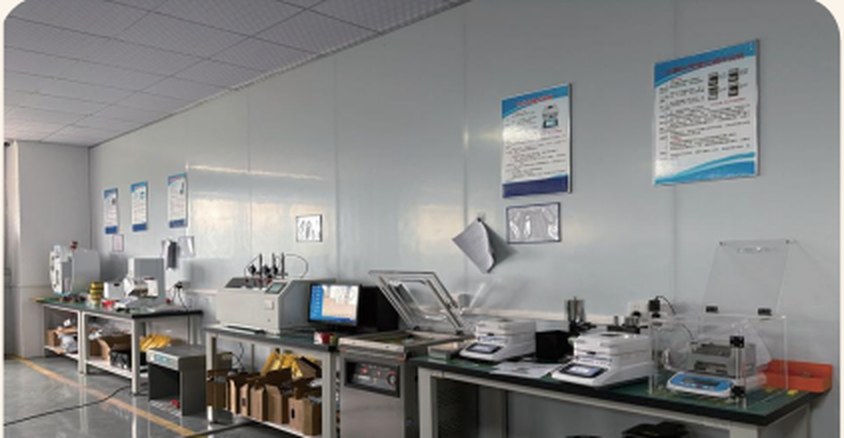
What the table does
and does not tell you.
- 01 Orientation matters. Mechanical values are measured on XY-printed specimens. A part printed vertically will not reach the same strength along Z, so design for the direction the load actually runs.
- 02 Moisture changes the result. PA6-CF and TPU absorb water; a wet spool prints weaker and rougher. Dry before use and the data sheet values become reachable.
- 03 These are typical values, not guarantees. Figures carry a tolerance band because extrusion is a process. Every lot ships with its own batch test report — check the lot, not only the table.
What buyers ask about grade selection.
Why is PA6-CF stronger than PLA if it is also a filament?
The matrix is polyamide rather than polylactic acid, and chopped carbon fibre is compounded into it. Fibre carries load, so tensile strength reaches 102 MPa and flexural modulus 5 460 MPa, against 50 MPa and 2 950 MPa for PLA Basic.
Is a higher tensile number always the better material?
No. Tensile strength says how much pull a specimen took before breaking, not how a part will behave in service. A gear may need stiffness, a seal needs elongation, a cover needs clarity. Choose the property the part actually has to survive, then check the grade against it.
Can all five grades run on the same printer?
PLA, PLA+ and PETG run on an open-frame machine. PA6-CF needs a hardened nozzle, a 90–100 °C bed and ideally an enclosure. TPU 95A prints slowly on a direct-drive extruder. So the printer, not only the material, decides which grades are practical.
How do I get the full data sheet for a grade?
Ask our sales team for the TDS of the specific grade and colour you are considering. Every lot also ships with a batch test report covering in-line diameter control and inspection results.
Tell us the part,
we name the grade.
Send the application, the load it has to carry and the temperature it sees — we come back with the grade, the colour options and a quotation for wholesale or OEM volumes.
Request a Quote
Tell us the machine, material and quantity you need.
- [email protected]
- +8616619919553
- Office
- 14th Floor, Block A, Building 2, University Science Park, No. 11 Changchun Road, High-Tech District, Zhengzhou, Henan, China
- Factory
- Hechang Town, Heshan City, Jiangmen City, Guangdong Province, China