
PETG filamentTough, low-warp · 1.75 mm
PETG Basic sits between PLA and ABS: 45 MPa tensile strength, 2 230 MPa flexural modulus and a 75 °C Vicat softening point, with layer adhesion strong enough to take a knock. It prints on an open-frame machine, which is why it is the practical choice for functional parts and everyday fixtures.
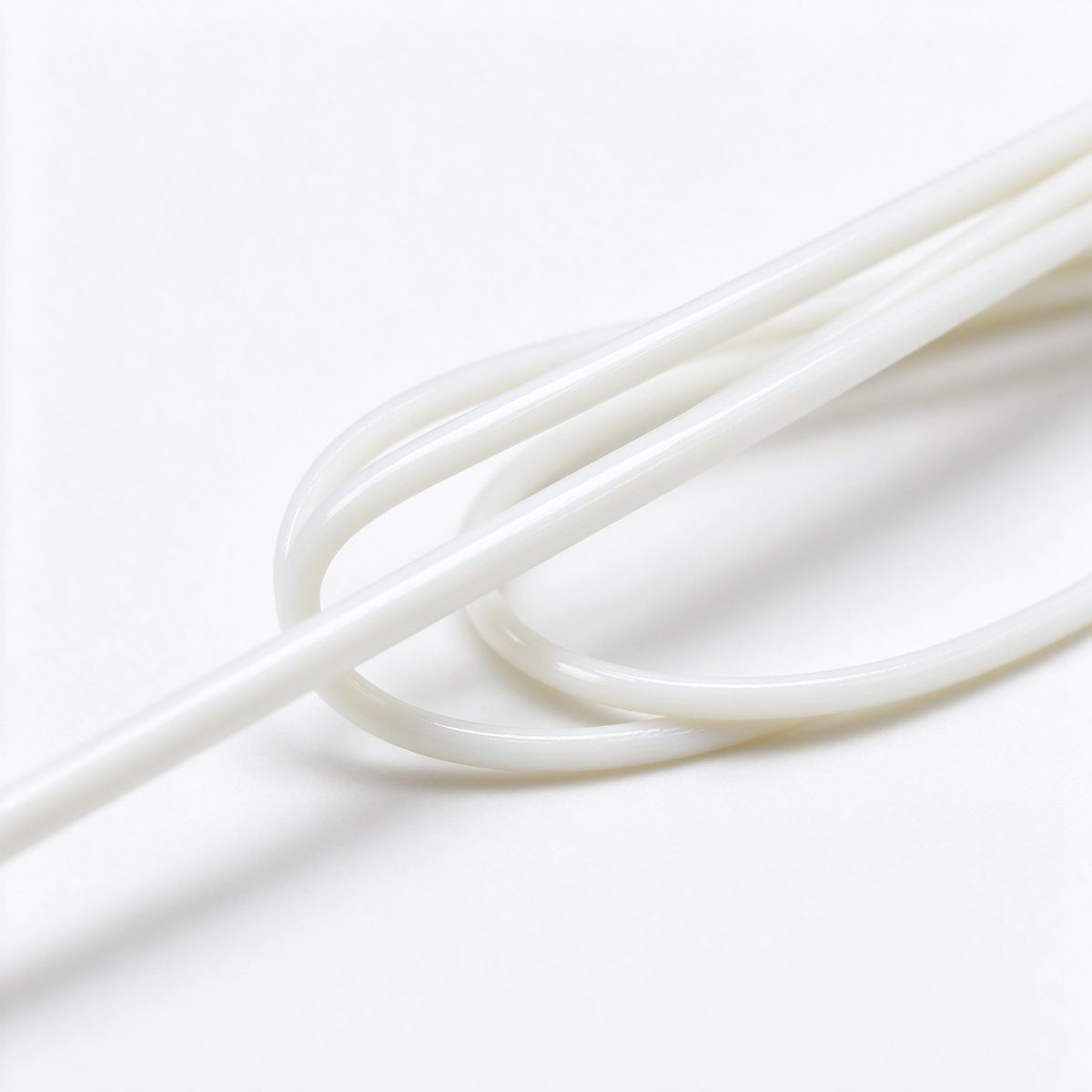
PETG Basic, measured
not described.
PETG Basic — tough, low warp, everyday functional prints.
- 01 Layer adhesion you can drop. Unnotched impact strength is 35 kJ/m² and notched impact 5.0 kJ/m². Where a PLA part cracks along a layer line after one knock, PETG absorbs the hit and stays whole.
- 02 More heat headroom than PLA. Vicat 75 °C and HDT 70 °C, against 58 °C and 60 °C for PLA Basic — about 15 °C more before a part starts to sag, which covers a car interior, a warm enclosure or a part washed in hot water.
- 03 Prints without an enclosure. Low warp and a 3–7 g/10 min melt flow index mean a stock open-frame printer handles it. No heated chamber, no ABS-style odour, no solvent smoothing step.
PETG Basic filament — measured values.
Figures are reported against the ASTM method stated beside each property, on specimens printed in XY orientation unless noted. Batch test reports are available per lot.
| Density | 1.23 ± 0.1 g/cm³ASTM D792, 23 °C |
| Vicat softening temperature | 75 ± 3 °CASTM D1525, 5 kg, 50 °C/h |
| Heat deflection temperature | 70 ± 3 °CASTM D648, 0.45 MPa |
| Melting temperature | 160 ± 5 °CASTM D7426, 10 °C/min |
| Melt flow index | 3–7 g/10 minASTM D1238, 210 °C / 2.16 kg |
| Tensile strength, XY | 45 ± 5 MPaASTM D638, 20 mm/min |
| Elongation at break, XY | 10 ± 2 %ASTM D638, 20 mm/min |
| Flexural modulus, XY | 2 230 ± 50 MPaASTM D790, 5 mm/min |
| Flexural strength, XY | 70 ± 5 MPaASTM D790, 5 mm/min |
| Impact strength, XY | 35 ± 3 kJ/m²ASTM D6110, 23 °C |
| Notched impact strength | 5.0 ± 0.5 kJ/m²ASTM D6110, 23 °C |
| Young's modulus, XY | 530 ± 30 MPaASTM D638, 20 mm/min |
Compare this grade against the rest of the range in the filament comparison table.
A starting point for your slicer.
These are the settings we run when the grade is qualified on our own bench. Treat them as a starting window, then tune to your machine — and confirm against the lot TDS before a production run.
| Nozzle temperature | 230–250 °C |
| Bed temperature | 75–85 °C |
| Drying before use | 65 °C for 4–6 h if the spool has been open for weeks |
| Part cooling | 40–60 % |
| Print speed | 40–80 mm/s |
| Retraction | Tune up — PETG strings more than PLA |
| Bed adhesion | PEI sheet, glue stick on glass; avoid excessive squish |
| Enclosure | Not required |
Where buyers use PETG Basic.
Clear and translucent light covers
The PETG Clear shades print into light-diffusing panels, guards and display covers without the brittleness of acrylic.
Machine guards and safety covers
Takes impact without shattering, and holds shape at working temperatures where PLA would soften.
Bottles, containers and ducts
Food-adjacent and chemical-resistant parts where a sealed wall and low warp matter.
Fixtures and everyday production parts
The default functional material for jigs, brackets and housings that do not need engineering-grade stiffness.
Shades available in PETG Basic.
PETG runs across three colour families — 8 clear, 2 opaque and 5 crystal shimmer shades, 15 codes in total. Colour matching for custom shades is done in-house.
What buyers ask about PETG Basic.
PETG or PLA for a functional part?
PETG when the part takes impact, sits in warmth or needs to be clear — it is tougher and has about 15 °C more heat headroom. PLA when the part is a display model, a prototype or needs maximum stiffness and crisp detail at high speed.
Does PETG need an enclosure?
No. PETG warps far less than ABS and prints on an open-frame machine at 230–250 °C with a 75–85 °C bed. An enclosure helps on very large parts, but it is not a requirement.
Why does PETG string and how is it controlled?
PETG keeps flowing at low pressure, so it strings more than PLA. Raise retraction distance slightly, lower the print temperature towards 230 °C, and keep travel moves short. Dry filament also strings less.
Is PETG UV-stable outdoors?
For occasional outdoor use it holds up better than PLA, but for permanent outdoor parts we recommend our ASA grade, which is formulated for UV and weather exposure. Ask for the ASA data sheet if the part lives outside.
Send the shade, the grade
and the spool weight.
We come back with the matching grade, a colour trial plan and a packing proposal — and quote wholesale and OEM volumes directly, without a trading layer in between. No guessed specifications.
Request a Quote
Tell us the machine, material and quantity you need.
- [email protected]
- +8616619919553
- Office
- 14th Floor, Block A, Building 2, University Science Park, No. 11 Changchun Road, High-Tech District, Zhengzhou, Henan, China
- Factory
- Hechang Town, Heshan City, Jiangmen City, Guangdong Province, China